Comfort
Keep pressure and traditional ear tips out of the ear canal.

SONR TECHNOLOGY
Bone conduction leaves the ear canal open and makes audio possible where traditional listening gets in the way.
See how it works
HOW IT WORKS
We usually hear through air. Bone conduction takes another route: vibration travels through the bones of the skull to the inner ear.
Audio is converted into controlled mechanical vibration.
Vibration travels through bone instead of relying only on the ear canal.
The inner ear receives the signal while the ear canal stays open.

UNDERWATER AUDIO
Water blocks the 2.4 GHz wireless signal used by Bluetooth. SONR solves this by storing compatible audio directly on the device for underwater playback.
OPEN-EAR BY DESIGN
No traditional earbuds, no wires and no sealed ear canal. The result is a different kind of comfort in water and greater awareness during outdoor training.
Compare listening modesKeep pressure and traditional ear tips out of the ear canal.
Hear more of your environment while running and cycling.
Choose a compact swim player or a full multisport headset.
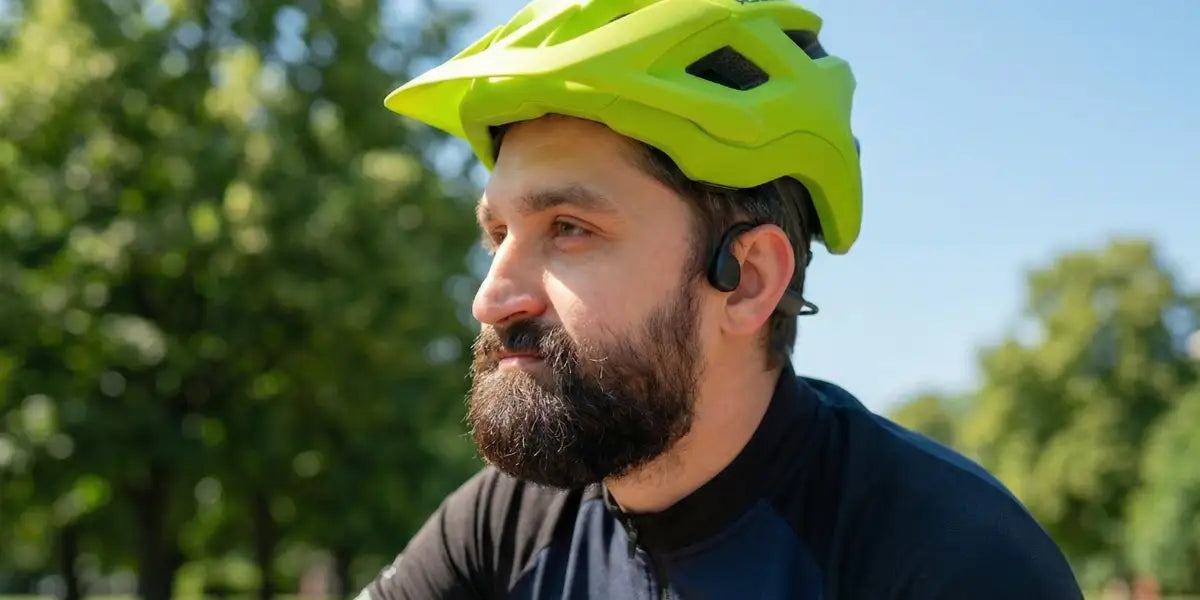 RIDE
BUILT TO MOVE
Choose the design that fits your training: a compact pool player or a headset for multiple sports.
Explore all productsTHE ESSENTIAL ANSWER
No. Water blocks the Bluetooth signal. For swimming, transfer audio to the device and use its onboard music mode.
Why Bluetooth stops underwater Read all support answers